
Last Updated:
February 27, 2026
Fertilizer is one of the most effective tools for improving lawn color and density, but it can also cause damage when misused. Grass can be damaged by fertilizer if too much is applied, nutrients are distributed unevenly, or applications are made at the wrong time of year. When this happens, the lawn may struggle to hold moisture, lose its green color, and develop thin or dead areas.
Despite the name, fertilizer burn does not involve heat or chemical scorching. The issue comes from salt concentration in the soil. Most lawn fertilizers contain salts that allow nutrients to dissolve and move into plant roots. When those salts become too concentrated, they disrupt the natural flow of water into the grass plant.
Instead of absorbing moisture, grass roots begin to lose it. As dehydration sets in, turf may turn yellow, then brown, and eventually brittle. In lighter cases, grass may recover once conditions improve. In more extreme situations, root damage can be permanent, resulting in bare spots.
Healthy lawns depend on a steady supply of nutrients, not sudden overloads. Applying fertilizer beyond recommended rates forces grass to take in more nitrogen than it can handle. This pushes excessive leaf growth above ground while the root system falls behind.
At the same time, excess salts interfere with water absorption, leaving grass stressed even when irrigation is adequate. Uneven spreading makes the problem worse, as some areas receive far more nutrients than others, creating patchy damage across the lawn.
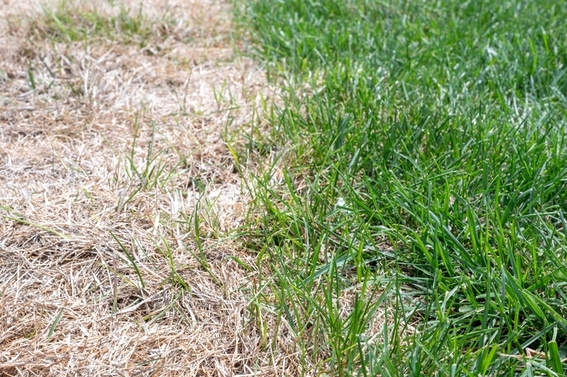
Lawn damage caused by fertilizer often becomes noticeable shortly after application. Warm temperatures and dry conditions can speed up symptom development. While fertilizer burn can resemble drought stress or disease, timing and pattern usually give it away. When the following symptoms appear soon after fertilization, excess nutrients are often the root cause.
Yes, the type of fertilizer used plays a major role in burn risk. Quick-release fertilizers deliver nutrients rapidly, which can produce fast color improvement but also increases the chance of stressing the lawn. These products are especially risky if applied too heavily.
Slow-release fertilizers feed grass gradually, allowing roots to absorb nutrients over time. This reduces shock and promotes more stable growth. Liquid fertilizers can also cause damage if overapplied, but they tend to distribute nutrients more evenly when used properly. Granular fertilizers are more likely to create visible streaks if spread unevenly.
In many cases, fertilizer burn is not permanent. Light to moderate damage often improves with proper watering. Deep irrigation helps flush excess salts from the roots and restores moisture balance within the plant.
As long as roots remain healthy, grass may regain color and density within a few weeks. Severely damaged areas, however, may not recover without intervention. Overseeding or sod replacement may be needed in spots where grass has died completely.
Avoiding fertilizer damage does not mean skipping fertilization altogether. It simply requires careful application and attention to timing. Applying the right product at the right time allows grass to benefit from nutrients without unnecessary stress. Effective prevention strategies include:
Professional lawn care programs remove much of the risk associated with fertilizing on your own. Trained technicians adjust nutrient rates based on grass type, soil conditions, and seasonal growth patterns. This tailored approach prevents sudden nutrient overloads and supports consistent lawn health.
Professionals also rely heavily on slow-release products and strategic scheduling, which encourages steady growth rather than quick surges. Early signs of stress are easier for trained eyes to spot, allowing adjustments before serious damage occurs. Reach out to Healthy Lawn today for information on the best lawn care programs in New Jersey!
Q: Can fertilizer permanently ruin a lawn?
A: Severe overapplication can kill grass, but most cases are mild and recoverable.
Q: How fast does fertilizer burn show up?
A: Damage often becomes visible within a few days, especially in warm weather.
Q: Will watering right after fertilizing help?
A: Yes. Watering helps move nutrients into the soil and reduces salt buildup on grass blades.
Q: Are organic fertilizers safer?
A: They are typically slower-release and less likely to burn, but excessive use can still cause damage.
Q: Can fertilizer burn happen outside of summer?
A: Yes, though it is less common. Heavy applications in cool weather can still stress grass.
Q: Should I apply more fertilizer if my lawn looks damaged?
A: No. Additional fertilizer can worsen the problem. Wait until the lawn recovers before applying again.

Local lawn care services from a team that cares.