
Last Updated:
July 24, 2026
Most homeowners recognize weeds like dandelions and crabgrass almost immediately, but black medic often goes unnoticed until it begins spreading throughout the lawn. Because its leaves resemble clover, many people mistake it for a harmless plant at first. In reality, black medic is a fast-growing broadleaf weed that can quickly establish itself in weak or thinning turf.
Black medic is an annual or short-lived perennial weed that reproduces by seed and thrives in lawns where grass is struggling to compete. If you are seeing strange yellow flowers popping up across your lawn, this blog post will help you identify a likely black medic invasion. Be sure to check out our weed control services for more help!
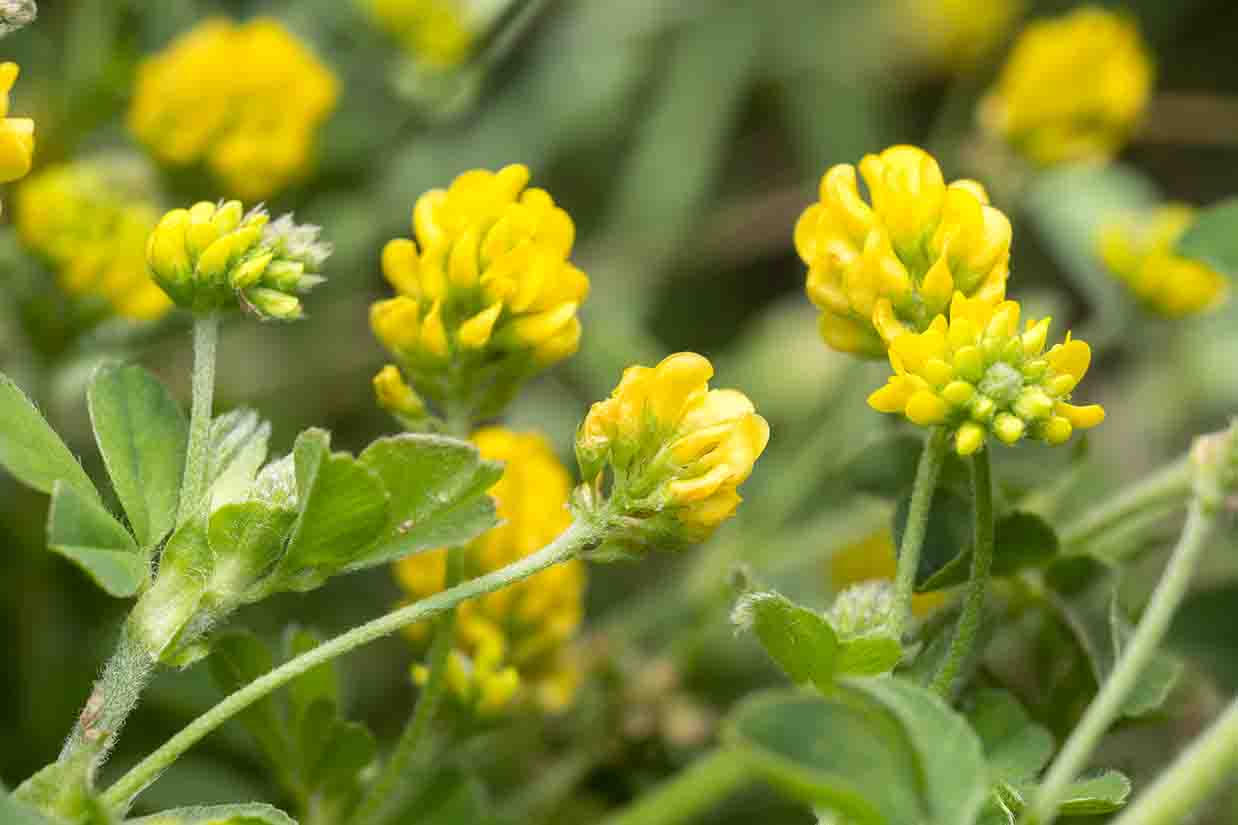
Black medic has a low-growing, sprawling growth habit that allows it to blend into the surrounding grass. Its stems branch outward along the soil surface, forming small patches that gradually become larger over time. The leaves are divided into three rounded leaflets, giving the plant a clover-like appearance. Unlike clover, however, each leaflet has a tiny pointed tip and often features faint veins extending toward the edges.
During the growing season, black medic develops clusters of tiny yellow flowers that eventually mature into small black seed pods. These dark seed pods are where the weed gets its common name. Mature plants rarely grow taller than a few inches, but their spreading stems can cover surprisingly large areas if left untreated..
Key Characteristics:
Black medic is considered an opportunistic weed. Rather than invading healthy turf at random, it usually appears where growing conditions already favor weeds over grass. Thin lawns, nutrient deficiencies, and compacted soil create the perfect environment for seeds to germinate and spread.
Unlike some weeds that thrive only under wet conditions, black medic is surprisingly adaptable. Its taproot helps it tolerate dry periods better than many turfgrass species, allowing it to continue growing when grass begins showing signs of stress. Several common lawn conditions encourage black medic growth.
Black medic rarely kills healthy grass outright, but it competes aggressively for sunlight, moisture, and growing space. As patches expand, desirable turf becomes thinner and less uniform, creating an uneven appearance across the lawn.
Once black medic begins producing seed, the problem often multiplies quickly. A single season of seed production can introduce enough seeds into the soil to cause recurring infestations for years. Even after existing plants are removed, dormant seeds may continue germinating whenever favorable conditions return.
Beyond its appearance, black medic can interfere with lawn recovery efforts. Newly seeded grass struggles to compete with established weeds, and thin areas become increasingly vulnerable to additional weed species invading alongside black medic.
Unlike creeping weeds that rely heavily on runners or underground stems, black medic spreads primarily through seed production. After flowering, each plant develops numerous seed pods that gradually darken as they mature. These seeds are easily dispersed by mowing equipment, foot traffic, pets, wildlife, and even water movement during heavy rain.
Because seeds can remain dormant in the soil for multiple growing seasons, simply removing visible plants doesn't always eliminate the problem. New seedlings may continue emerging long after the original infestation appears to be gone.
Black medic also grows quickly during favorable weather, allowing young plants to mature and produce additional seed before many homeowners realize they have a weed problem. Preventing seed production is one of the most effective ways to reduce future infestations.
The most successful black medic control strategy combines healthy lawn care practices with timely weed management. Thick, vigorously growing grass naturally crowds out young weed seedlings and leaves fewer opportunities for black medic to become established.
Improving overall lawn health often reduces future infestations far more effectively than relying on herbicides alone. When weeds do appear, early treatment prevents plants from producing the seeds responsible for long-term problems. Keep the following practices in mind when managing black medic.
Q: Is black medic the same as clover?
A: No. Black medic resembles clover because both have three leaflets, but black medic produces small yellow flowers and dark seed pods, while white clover has white blooms and spreads by creeping stems.
Q: Why is black medic growing in my lawn?
A: Black medic commonly appears in thin, stressed lawns with compacted soil, low fertility, or bare spots. It takes advantage of areas where grass isn't growing well.
Q: Will black medic go away on its own?
A: Individual plants may die, but they often leave behind seeds that can sprout in future seasons. Removing plants before they produce seed helps prevent recurring problems.
Q: Can I remove black medic by hand?
A: Yes. Small infestations can be pulled by hand, especially when the soil is moist. Be sure to remove the taproot and pull plants before they produce seeds.
Q: What kills black medic?
A: Selective broadleaf herbicides containing ingredients like 2,4-D, dicamba, or triclopyr are commonly used to control black medic without harming most turfgrasses when applied correctly.
Q: How do I prevent black medic from returning?
A: Keep your lawn thick and healthy with regular fertilization, proper mowing, deep watering, aeration, and overseeding. Dense grass leaves less room for black medic to establish.

Local lawn care services from a team that cares.