
Last Updated:
June 13, 2026
Chickweed may look harmless at first, especially when its small white flowers begin appearing throughout the lawn. However, this fast-growing weed can spread surprisingly quickly and create dense patches that compete directly with turfgrass. Left untreated, chickweed can crowd out desirable grass, reduce lawn density, and make your yard look uneven and neglected.
Because chickweed reproduces aggressively and can return season after season, identifying it early is one of the best ways to protect the long-term health of your lawn. The information in this post will help you find and control chickweed in your lawn.
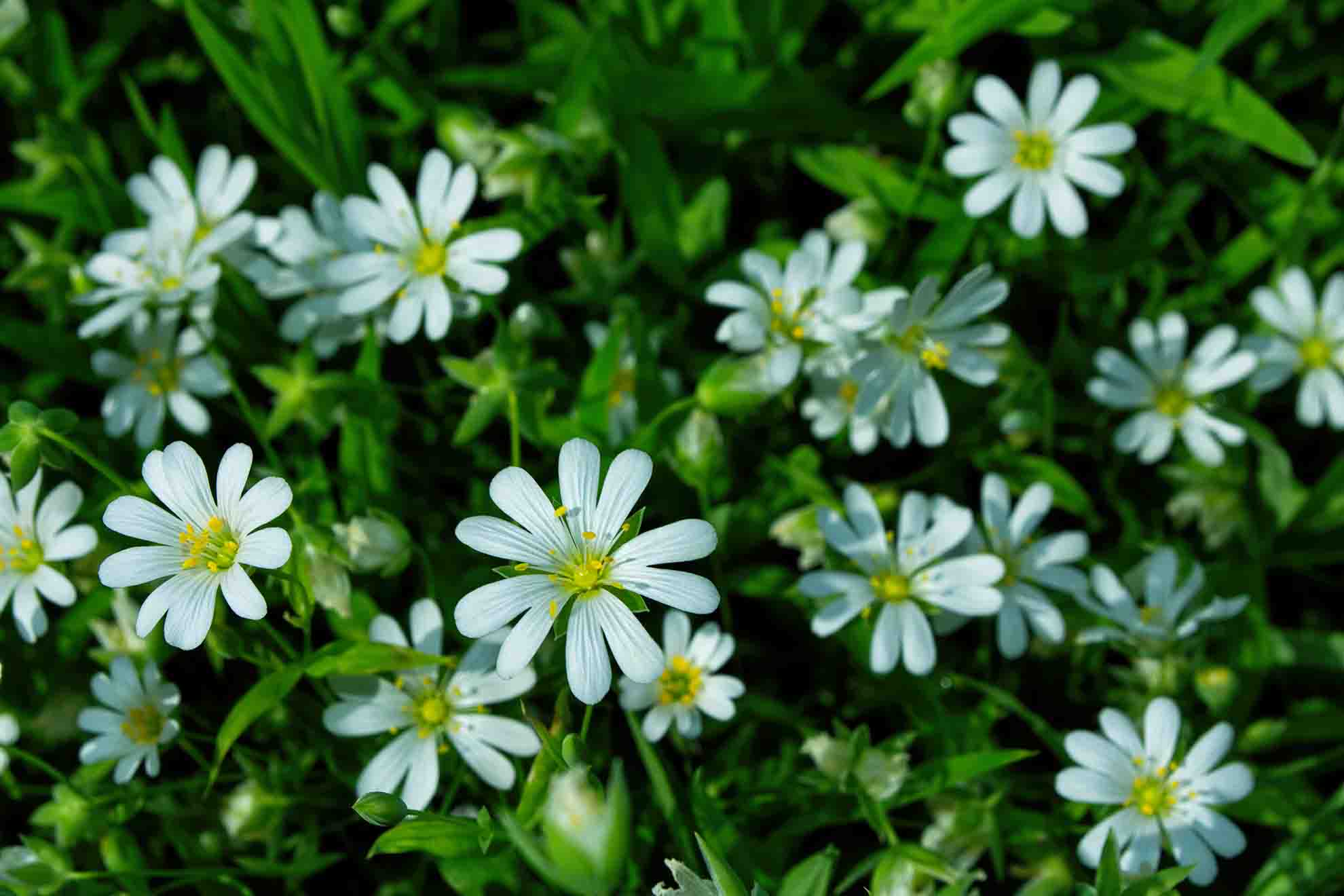
One of the easiest ways to recognize chickweed is by its low-growing, spreading growth habit. Rather than growing upright like grass, chickweed forms dense mats that creep across the soil surface. As stems spread outward, they can root at various points along the ground, helping the weed expand into larger patches.
The leaves are small, smooth, and bright green, typically growing in pairs along thin stems. During much of the growing season, chickweed produces tiny white flowers that are often mistaken for miniature daisies. When viewed closely, each flower has deeply divided petals that create a star-like appearance.
These distinctive flowers are often the first thing homeowners notice when chickweed begins invading lawns, landscape beds, or garden areas.
Common signs of chickweed include:
While many homeowners simply refer to all chickweed as one weed, there are actually two varieties most commonly found in residential landscapes. Understanding which type you're dealing with can help explain its growth habits and persistence.
Common chickweed is the variety most frequently found in lawns. It behaves as a winter annual, meaning it germinates during cooler weather, grows through fall and spring, and often declines once summer temperatures become consistently hot.
This variety spreads rapidly through both seeds and creeping stems, allowing infestations to develop quickly in favorable conditions.
Mouse-ear chickweed is less common but often more persistent. Unlike common chickweed, it behaves as a perennial and can survive year after year. Its leaves and stems are covered with fine hairs, giving them a fuzzy appearance and texture.
This variety is often better adapted to dry conditions and may be more difficult to eliminate because it does not naturally die off during summer.
Chickweed's ability to spread is one reason it becomes such a persistent lawn problem. A single plant can produce a tremendous number of seeds during its life cycle, allowing infestations to expand rapidly if left unchecked.
In addition to seed production, stems that come into contact with moist soil can develop roots and create new plants. This means even relatively small patches can gradually spread into larger problem areas over time.
Another challenge is the longevity of chickweed seeds. Seeds can remain viable in the soil for years, waiting for favorable conditions before germinating. As a result, removing visible plants does not always eliminate the potential for future outbreaks.
Factors that contribute to chickweed spread include:
Like many lawn weeds, chickweed thrives when turfgrass is struggling. Areas with weak grass provide the open space and sunlight needed for seedlings to establish and spread.
Moisture is one of the biggest contributors to chickweed infestations. The weed performs especially well in lawns that stay damp for extended periods due to overwatering, poor drainage, or excessive shade. Compacted soil can make these moisture issues even worse by limiting water movement and reducing turfgrass health. Lawns that receive frequent light watering may also create favorable conditions for chickweed while discouraging deeper turf root development.
Conditions that commonly lead to chickweed problems include:
The best defense against chickweed is creating lawn conditions that favor healthy grass growth instead of weed development. Dense turf naturally limits the amount of space available for weeds to establish and compete.
Proper mowing practices can help strengthen grass while reducing opportunities for chickweed seedlings. Maintaining adequate mowing height allows turfgrass to shade the soil and improve overall lawn density.
Addressing drainage issues and reducing excessive moisture can also make the environment far less attractive to chickweed. In many cases, improving lawn health alone significantly reduces future infestations.
To help prevent chickweed growth:
Once chickweed is actively growing, prompt action can help prevent it from spreading further. Small infestations can sometimes be removed by hand, particularly when the soil is moist and roots can be extracted more easily.
Larger patches often require additional control methods. Because chickweed spreads through both seeds and stems, removing plants before flowering can help reduce future infestations. Selective post-emergent weed control products may also be effective when applied during periods of active growth.
After removal, it is important to repair any thin or damaged turf areas. Otherwise, the open space may simply invite more chickweed or other weeds to return.
To manage active chickweed infestations:
Q: Is chickweed considered a broadleaf weed?
A: Yes. Chickweed is classified as a broadleaf weed and is commonly found in lawns, gardens, and landscape beds.
Q: When is chickweed most active?
A: Chickweed grows most aggressively during cool, moist conditions, particularly in fall, winter, and spring.
Q: Why does chickweed appear in shady areas?
A: Chickweed tolerates lower light levels better than many turfgrasses, allowing it to thrive in shaded sections of the lawn.
Q: Can chickweed spread without producing seeds?
A: Yes. Chickweed can spread when creeping stems root into the soil and form new plants.
Q: Will chickweed disappear during summer?
A: Common chickweed often declines in hot weather, but its seeds remain in the soil and can germinate later. Mouse-ear chickweed may continue growing through summer.
Q: What is the most effective way to prevent chickweed?
A: Maintaining dense turf, improving drainage, reducing excessive moisture, and correcting weak lawn conditions are among the most effective long-term prevention strategies.

Local lawn care services from a team that cares.