
Last Updated:
August 15, 2026
Common purslane (Portulaca oleracea) is a summer annual that typically emerges from late spring into summer and becomes more noticeable as temperatures rise. It tends to take advantage of thin, stressed, or newly established turf where there is enough exposed soil for seeds to germinate.
Purslane is particularly troublesome because individual plants can produce seeds that remain in the soil and contribute to future infestations. Preventing the weed from becoming established in the first place is usually easier than dealing with a large patch later in the season.
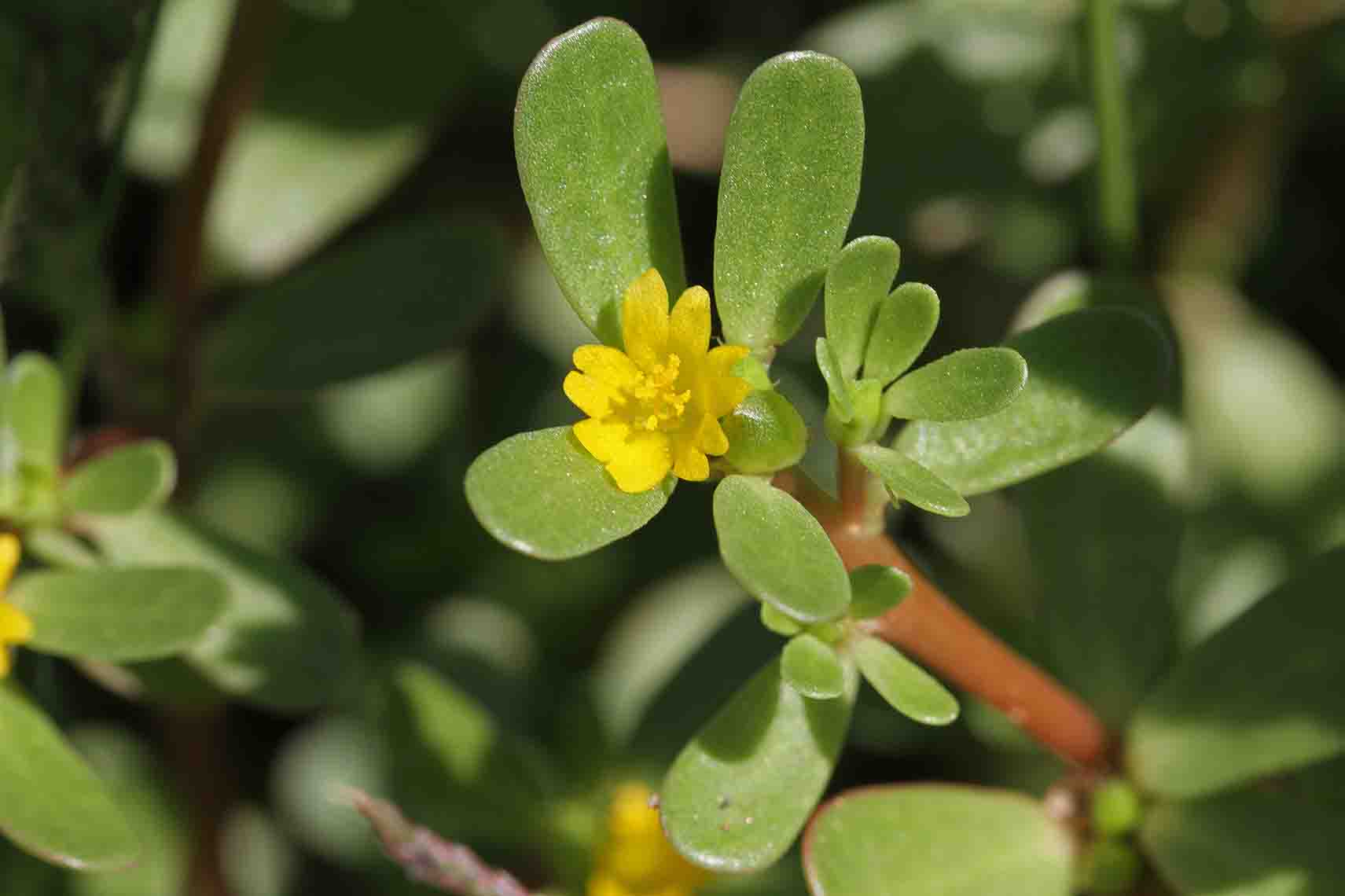
Purslane has several features that make it easier to distinguish from other low-growing weeds. The most noticeable characteristic is its fleshy foliage. Unlike the thin leaves of many common lawn weeds, purslane leaves are thick, smooth, and somewhat succulent.
The stems typically grow along the ground and can develop a reddish or pinkish color. As the plant expands, stems spread outward from a central growing point, creating a dense, sprawling appearance.
Small yellow flowers may appear during the warmer portions of the growing season. These flowers are short-lived and can eventually develop into seed-producing structures. To help recognize purslane, look for:
Purslane is a summer annual, meaning the plant typically grows, flowers, produces seed, and dies during a single growing season. New plants emerge when temperatures and soil conditions become favorable.
Seedlings may initially grow upright, but the stems soon begin spreading laterally across the soil. During summer, established plants can form dense mats that occupy open spaces between desirable plants.
Purslane primarily reproduces through seed, although broken pieces of stems can also contribute to new growth under suitable conditions. Mature plants produce small seed capsules that release seeds onto the soil surface. The general growth cycle looks like this:
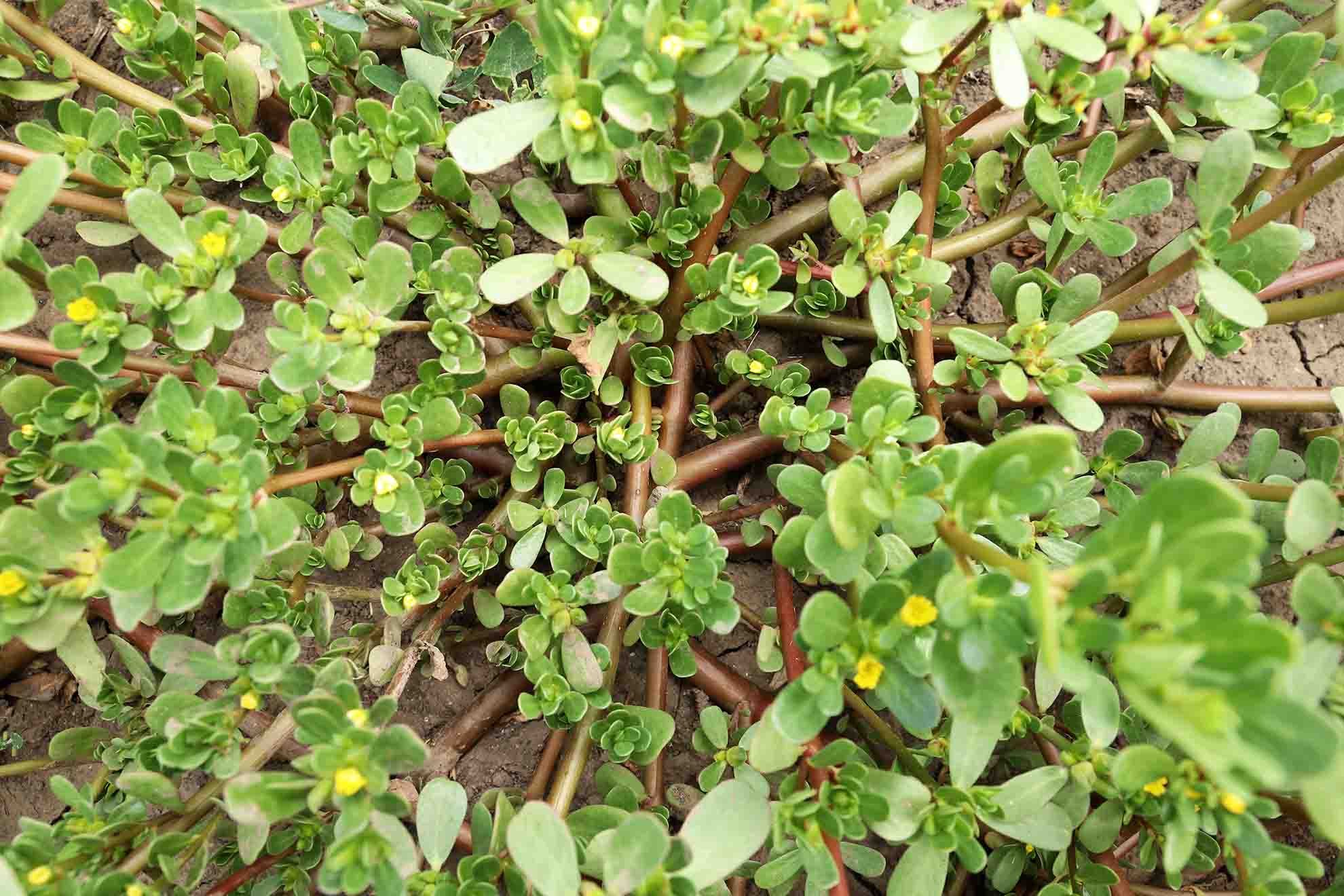
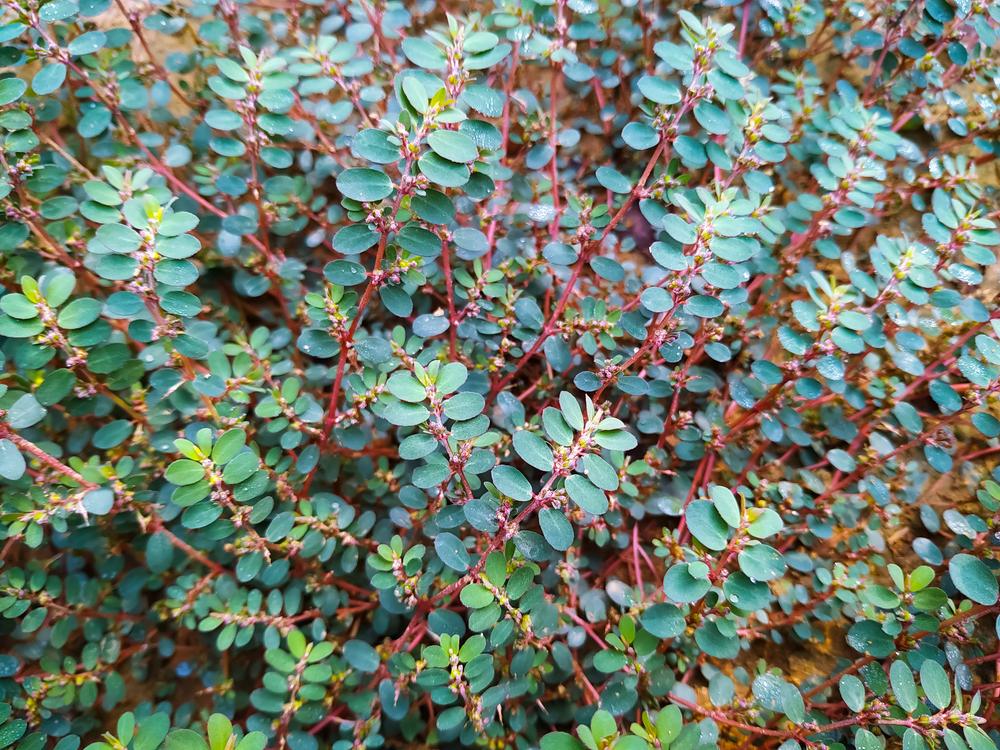
Purslane can sometimes be confused with other low-growing broadleaf weeds, especially when it is still young. Looking closely at the leaves and stems can help narrow down the identification. Purslane has noticeably thick, succulent leaves and smooth stems.
The plant tends to spread horizontally and has a fleshy appearance that is unusual among common turf weeds. Its stems can range from green to reddish, while the leaves are generally rounded or wedge-shaped and arranged along the stems.
Prostrate spurge can look somewhat similar because it also grows close to the ground. However, spurge generally has much thinner foliage and stems. Another useful distinction is the sap. Spurge produces a milky sap when its stems are broken, while purslane does not have that characteristic. When comparing the two:
Purslane doesn't need a perfectly healthy lawn to survive. In fact, it often gains a foothold where desirable turfgrass has already been weakened.
Thin grass creates openings where sunlight can reach the soil surface. These spaces give purslane seeds an opportunity to germinate without having to compete with a dense layer of established turf.
Summer heat and drought can make the situation worse. Purslane is well adapted to dry conditions, allowing it to persist when other plants are struggling. It is also commonly associated with thinning turf and newly established lawns. Conditions that can increase the likelihood of purslane include:
The best defense against purslane is a lawn that leaves very little room for weeds to establish. Dense turf blocks sunlight from reaching exposed soil and allows desirable grass to compete more effectively.
Regular mowing, appropriate fertilization, and proper irrigation all contribute to stronger turf density. If soil compaction or poor growing conditions are preventing grass from filling in, correcting those underlying problems can also reduce opportunities for purslane.
It is especially important to address thin areas before summer arrives. Newly established or weakened turf can be particularly vulnerable to purslane during the warmest part of the growing season. To make your lawn less inviting to purslane:
Getting rid of purslane is easiest when plants are still small. Individual plants can often be removed manually, particularly when the soil is moist. The goal is to remove the entire plant before it has an opportunity to flower and produce additional seed.
One important consideration is what happens to the plant after removal. Purslane can potentially regenerate from plant fragments, so pulled material should be removed from the lawn rather than left sitting on damp soil.
For larger infestations, appropriate post-emergent weed control may be an option. Some herbicides are labeled for purslane in turf, but product selection depends on the grass species, application site, and label directions. Pre-emergent products can also help prevent plants from developing from seed, although they will not eliminate purslane that has already emerged.
After controlling an infestation, improving turf density is an important part of preventing the weed from returning. To manage existing purslane:
Q: Is purslane a weed?
A: Common purslane is considered a broadleaf weed when it grows unwanted in lawns, gardens, and other maintained areas. It is a summer annual that can spread through seed and, under some conditions, stem fragments.
Q: When does purslane usually appear?
A: Purslane typically emerges during the warmer part of the growing season, with germination occurring from late spring into summer. It becomes increasingly noticeable during warm summer weather.
Q: Why is purslane growing in my lawn?
A: Purslane commonly establishes where turf is thin, stressed, newly seeded, or where soil has been disturbed. Full-sun areas and dry conditions can also favor its growth.
Q: Can mowing get rid of purslane?
A: Mowing can remove portions of the plant, but it generally isn't enough to eliminate established purslane. Because the plant grows low to the ground, some of its stems may remain below the mower's cutting height.
Q: Can I pull purslane by hand?
A: Yes. Hand removal can be effective for small infestations, especially when plants are young and the soil is moist. Remove the plants from the area afterward to reduce the chance of regrowth or additional seed production.
Q: What is the best way to prevent purslane?
A: Maintaining a thick, healthy lawn is one of the most effective long-term strategies. Proper mowing, watering, fertilization, and timely weed control can reduce the thin and exposed areas where purslane is most likely to establish.

Local lawn care services from a team that cares.