
Last Updated:
June 13, 2026
White clover is a common broadleaf weed that often finds its way into lawns that are struggling to maintain thick, healthy turf. Once established, white clover can spread across large sections of your lawn, creating patches that stand out from the surrounding turf.
Unlike many weeds that require specific growing conditions, white clover is remarkably adaptable. Because of its resilience, it often appears in areas where turfgrass has weakened, making it one of the most common weeds found in residential lawns. This post will teach you how to spot the warning signs of a white clover invasion and what you can do to control this weed.
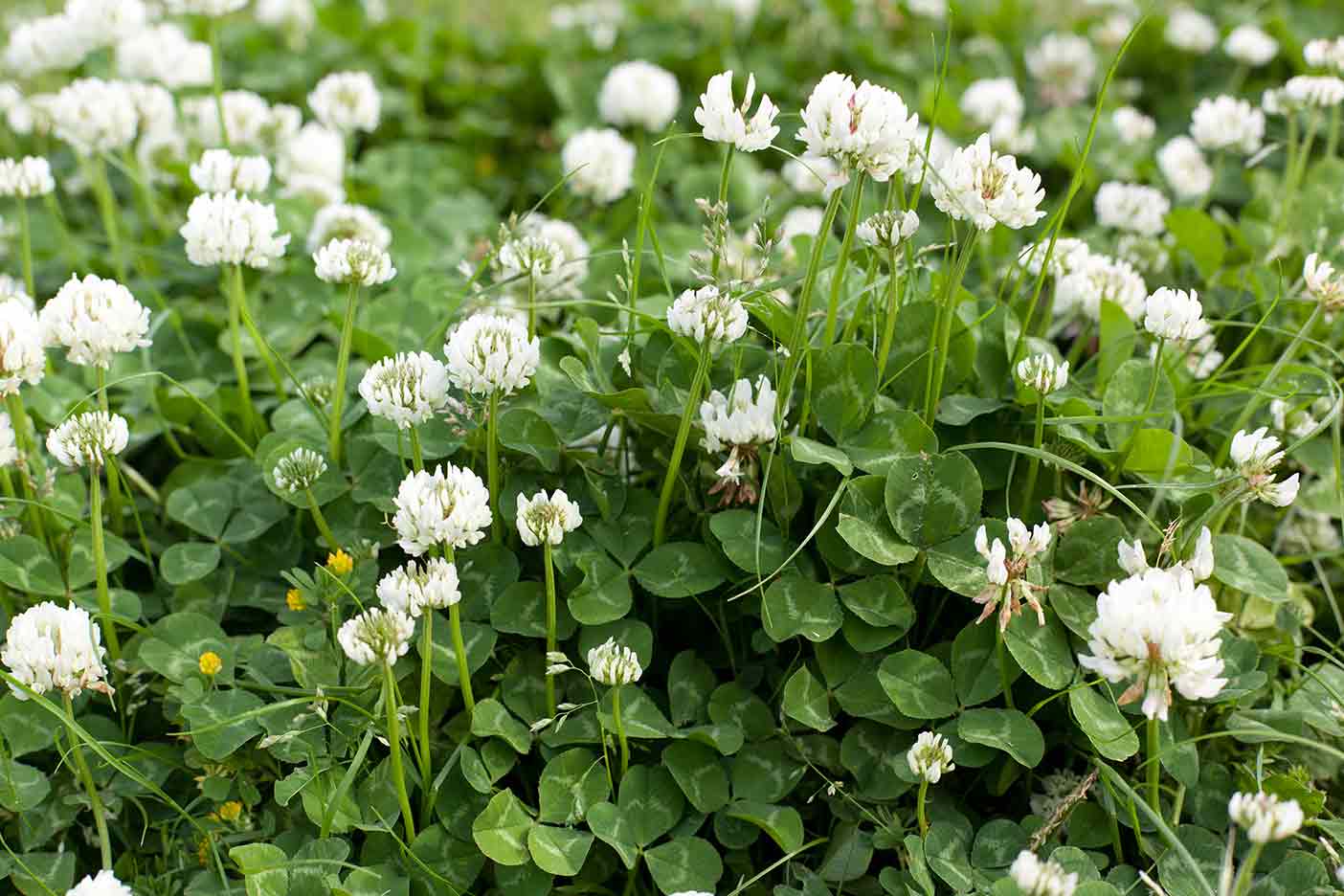
White clover has a very distinctive appearance that separates it from both turfgrass and many other lawn weeds. Its leaves are grouped into sets of three rounded leaflets, often featuring a lighter-colored crescent or watermark near the center of each leaflet.
During the growing season, small clusters of white flowers emerge above the foliage. These blooms resemble tiny pom-poms and can attract bees and other pollinators. The plant itself stays relatively low to the ground and spreads horizontally rather than growing upright.
If you're trying to determine whether you have white clover, look for:
One reason white clover is so successful is its ability to thrive in conditions that are difficult for turfgrass. Healthy, dense lawns naturally resist weed invasions, but when grass becomes thin or stressed, white clover can quickly move in and fill the available space.
Nutrient deficiencies are one of the biggest contributors to clover growth. White clover has the unique ability to utilize nitrogen differently than turfgrass, allowing it to survive in soils where grass may be lacking essential nutrients. It is also more tolerant of drought and compacted soil than many common lawn grasses.
Common lawn conditions that favor white clover include:
Many homeowners are surprised by how quickly a small patch of white clover can grow into a larger infestation. Unlike weeds that rely solely on seed production, white clover spreads in multiple ways.
Its creeping stems move across the soil surface and produce roots wherever they make contact with the ground. This allows new plants to form continuously from an existing patch. At the same time, white clover produces seeds that can germinate in favorable conditions and create new infestations elsewhere in the yard.
Because it spreads through both seeds and stems, controlling white clover often requires a combination of weed management and lawn improvement strategies.
Rather than appearing randomly, white clover is often responding to specific weaknesses in the lawn. Understanding these conditions can help homeowners address the underlying causes rather than simply treating the symptoms. Several environmental factors make lawns more susceptible to clover growth.
The most effective long-term solution for white clover is improving overall lawn health. A dense, vigorous lawn leaves little room for weeds to establish and naturally suppresses new growth.
Instead of focusing only on weed removal, homeowners should concentrate on strengthening the turf itself. When turfgrass is healthy and actively growing, white clover often struggles to compete.
Helpful lawn care practices include:
If white clover is already present, early treatment typically produces the best results. Small patches can sometimes be removed manually, although creeping stems can make complete removal difficult.
Larger infestations often require selective broadleaf weed control products. However, simply eliminating the visible clover is rarely enough. Without addressing the underlying lawn conditions that allowed it to develop, new plants may return in the future.
After treatment, improving turf density through fertilization and overseeding can help prevent reinfestation and restore a more uniform lawn appearance.
Q: Is white clover harmful to grass?
A: White clover competes with turfgrass for space and can create an uneven lawn appearance, especially when large patches develop.
Q: Why is white clover common in low-fertility lawns?
A: White clover can thrive in nutrient-poor soils where grass growth is limited, giving it a competitive advantage.
Q: Does white clover spread through roots?
A: White clover primarily spreads through creeping stems and seeds rather than deep root systems.
Q: Will white clover disappear on its own?
A: While environmental conditions can affect its growth, established white clover patches typically persist unless controlled.
Q: Can mowing help prevent white clover?
A: Proper mowing helps maintain dense turf, which can make it more difficult for clover to establish and spread.
Q: What is the best way to keep white clover from returning?
A: Maintaining a thick, healthy lawn through proper fertilization, watering, mowing, and overseeding is the most effective long-term prevention strategy.

Local lawn care services from a team that cares.