
Last Updated:
March 14, 2026
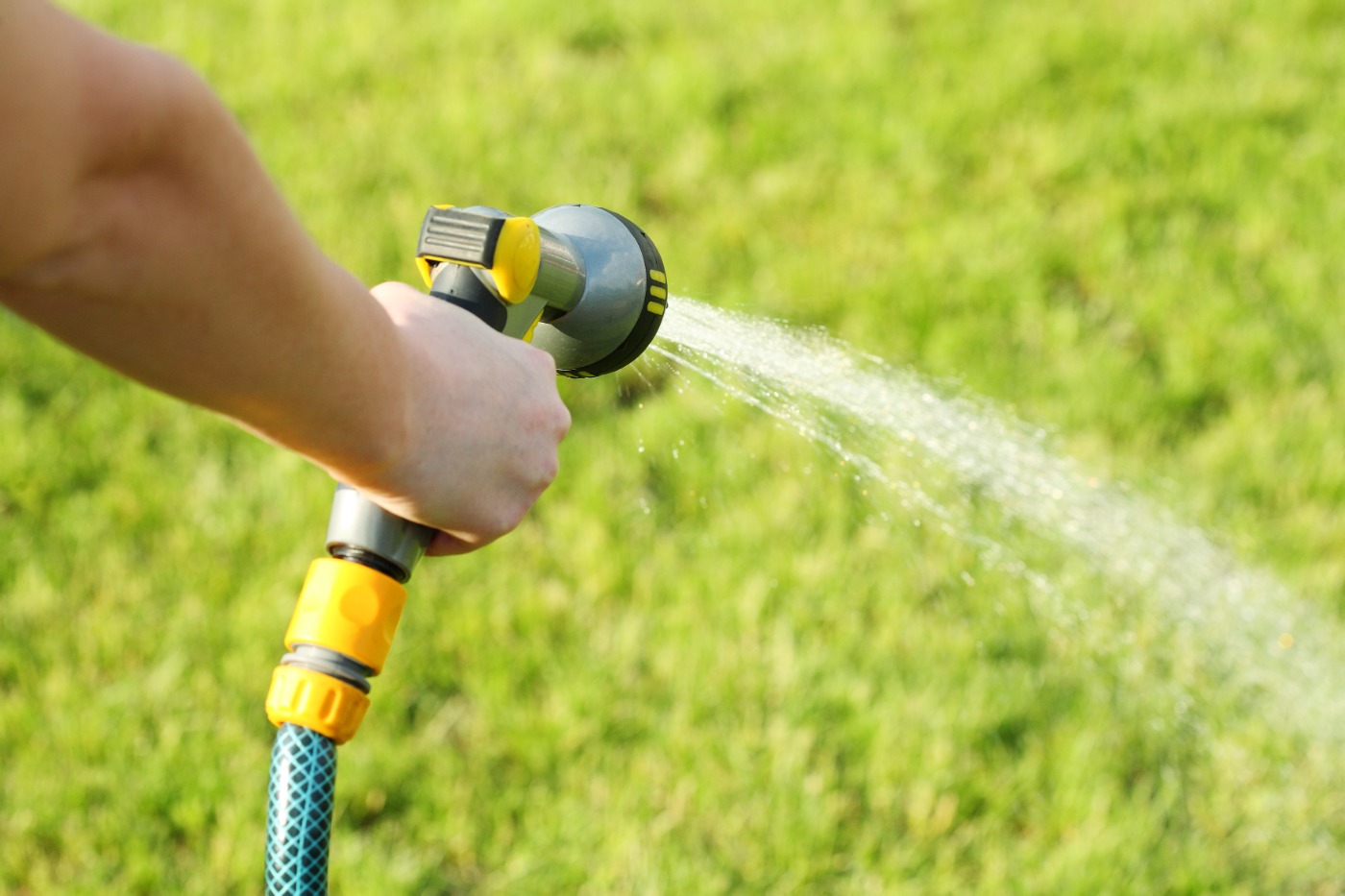
Applying fertilizer is one of the most effective ways to improve the health, color, and density of your lawn. Fertilizers provide grass with essential nutrients (primarily nitrogen, phosphorus, and potassium) that support root growth, leaf development, and overall strength. One of the most common questions is whether or not watering should happen immediately after fertilization.
The short answer is that in most cases, watering your lawn after fertilizing is highly recommended, but the exact timing and amount of water can vary depending on the type of fertilizer you applied. Keep reading to learn more!
In most situations, watering your lawn after fertilizing helps the nutrients move from the grass blades down into the soil where the roots can absorb them. Fertilizer granules sitting on top of the lawn cannot do much good until they dissolve and begin working into the soil. Water provides the moisture needed to activate many fertilizers and start delivering nutrients to the turf.
Without watering, granular fertilizer can remain on the surface longer than intended. This increases the chances of nutrients evaporating, washing away in a sudden rainstorm, or even burning the grass blades.
That said, not every fertilizer requires immediate watering. Some products are designed to sit on the leaf surface temporarily before irrigation occurs, while others rely on water to activate quickly. Reading the instructions on the fertilizer packaging is always important.
Watering after applying fertilizer does much more than simply dissolve the product. When done correctly, it improves how nutrients move through the soil and how effectively your lawn absorbs them. A properly watered lawn is better equipped to take advantage of the nutrients you just applied.
Here are some of the key benefits of watering your lawn after fertilizing:
Certain types of fertilizers work best when watered in shortly after application. Granular fertilizers are the most common example, as they rely on moisture to dissolve and release nutrients into the soil.
If fertilizer remains dry for long periods, the nutrients may sit idle on the lawn surface. Applying about ¼ to ½ inch of water after fertilizing is usually enough to activate the product without over-saturating the soil.
Although watering after fertilizing is usually recommended, there are exceptions. Some fertilizer types, especially certain liquid or foliar formulas, are designed to sit on the grass blades temporarily so the plant can absorb nutrients directly through the leaves.
In these situations, watering too soon can dilute or wash away the fertilizer before the grass has time to absorb it. For these products, it is typically best to wait several hours before watering or until the fertilizer has had time to dry.
You may want to delay watering when:
Skipping watering altogether can reduce the effectiveness of your fertilizer application. While nutrients may eventually move into the soil through rainfall or humidity, relying on natural conditions often leads to inconsistent results.
One common issue is fertilizer burn, which occurs when concentrated nutrients remain on the grass blades for too long. Nitrogen-heavy fertilizers are particularly capable of damaging turf when not watered in properly. Other problems that can occur without watering include uneven nutrient distribution, runoff during sudden rainstorms, and slower nutrient absorption.
Knowing how much and how often to water after fertilizing can make a significant difference in how your lawn responds. Too little water may leave fertilizer sitting on the surface, while too much can wash nutrients past the roots, resulting in ineffective applications.
Following a few basic watering practices can help maximize your fertilization results.
The type of fertilizer you use plays a major role in how watering should be handled. Some fertilizers are quick-release products that begin feeding the lawn immediately, while others release nutrients slowly over time.
In most cases, watering your lawn after fertilizing is one of the best steps you can take to ensure the nutrients reach the soil and begin supporting healthy grass growth. While some fertilizers require a short waiting period before watering, most granular products benefit from a light irrigation shortly after application.
If you are unsure about the best fertilization and watering schedule for your lawn, working with a professional lawn care provider can help ensure your turf receives the right nutrients at the right time for optimal results. Call Healthy Lawn today to get the best lawn fertilization in New Jersey!

Local lawn care services from a team that cares.